
James M. Ferguson
Genomics Software Engineer
I am a bioinformatician specialising in genomic technologies, writing new tools, long-read sequencing, signal analysis, machine learning, and associated hardware. I have a background in software development and more than a decade of pathology industry experience.
Research Interests
I am a Genomics Software Engineer at the Garvan Institute with a background in clinical pathology testing, algorithms and software development. Leading computational development within the Genomics and Inherited Disease Program's Genomic Technologies Group, I apply my unique skills to develop new bioinformatic tools, as well as design and support long-read sequencing infrastructure.
My research areas include:
- Nanopore signal analysis
- Clinical testing and method development
- Short tandem repeat disorders
- Viral genomics (HIV/SARS-Cov-2)
- Single-cell sequencing
- Direct RNA Sequencing
- Genome assembly
- Methylation detection
- Machine/Deep learning
Publication Highlights
InterARTIC: an interactive web application for whole-genome nanopore sequencing analysis of SARS-CoV-2 and other viruses
Summary
InterARTIC is a web application for analysing viral whole-genome sequencing data from Oxford Nanopore devices. It puts the ARTIC network workflows behind a graphical interface, so people without bioinformatics experience can build consensus genomes for viruses such as SARS-CoV-2. It runs on a laptop or directly on a GridION, and we show it working on SARS-CoV-2 and Ebola virus data.
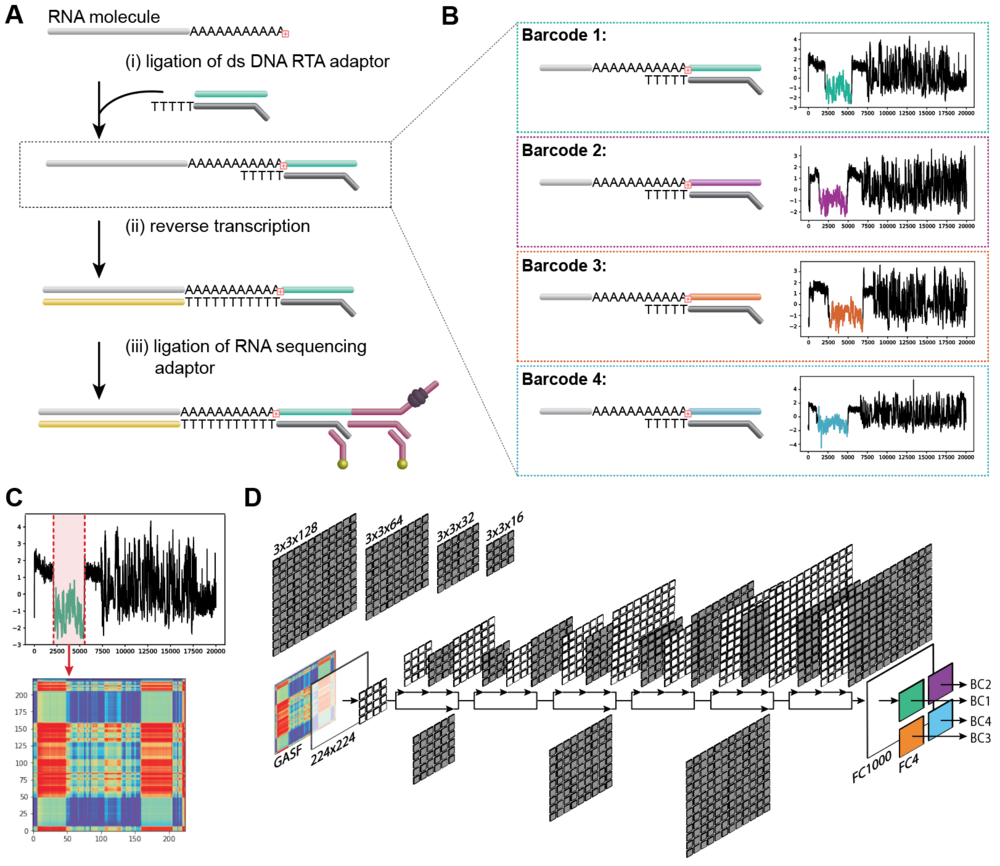
Molecular barcoding of native RNAs using nanopore sequencing and deep learning
Summary
Direct RNA nanopore sequencing had no way to barcode samples, which made it hard to use when RNA is limited. This paper gives an experimental barcoding protocol and DeePlexiCon, a deep learning tool that turns the raw signal into images and classifies the barcodes. It classifies 93% of reads with 95.1% accuracy, or 60% of reads with 99.9% accuracy.
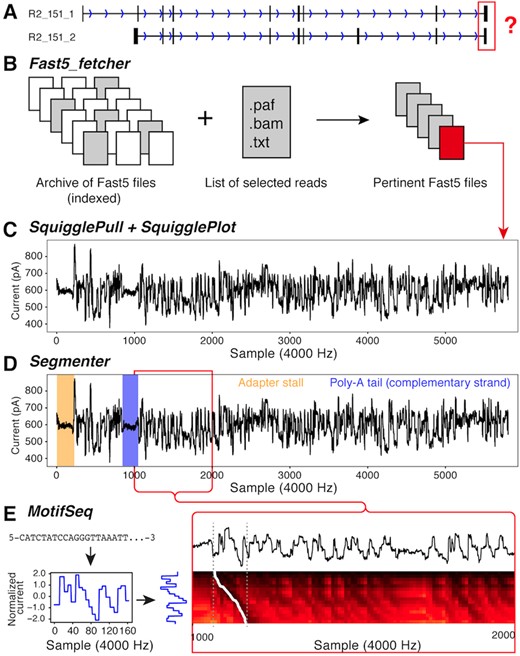
SquiggleKit: a toolkit for manipulating nanopore signal data
Summary
SquiggleKit is a toolkit for working with raw nanopore signal data. It handles file management, pulling out the signal for chosen reads, visualisation and signal processing. It is written in Python with few dependencies and runs on any platform.
Software
I write and maintain open source bioinformatics tools. See the list.
Contact
Genomic Technologies Group
Genomics and Inherited Disease Program
Garvan Institute of Medical Research